
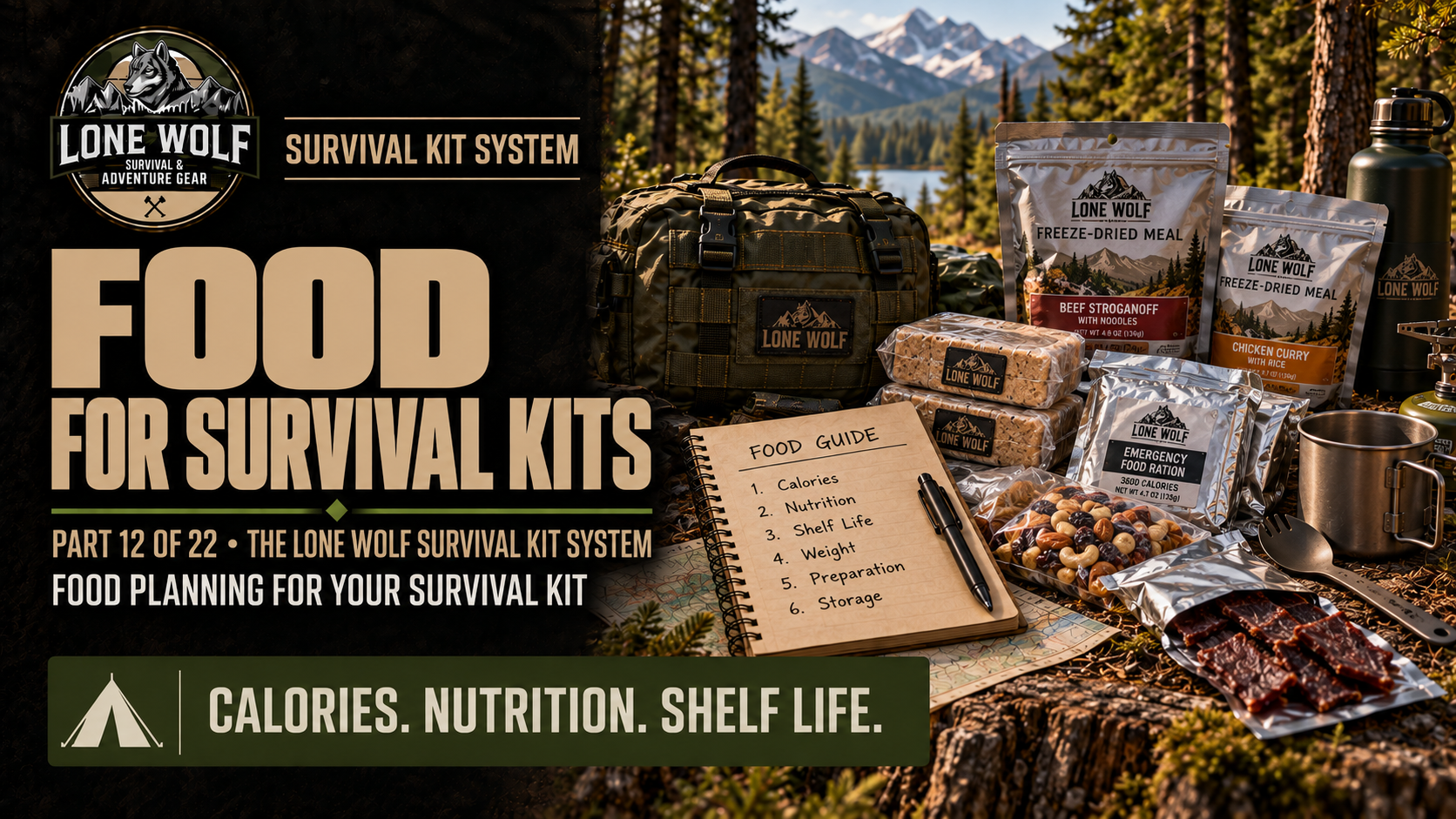
Food for Survival Kits
Choosing Food for Survival Kits
Part 12 of 22 - The Lone Wolf Survival Kit System
Introduction
Maintaining energy over time affects how well you think, move, work, and continue handling survival tasks. The distance, duration, weather, workload, and people involved all shape how much food is needed and what type of food makes sense.
Shorter situations place more emphasis on compact, calorie-dense foods that are easy to carry and eat, such as trail mix, nuts, energy bars, meat sticks, peanut butter packets, or other small ready-to-eat foods. EDC Kits usually have very little room for food and may carry only a few small items such as gum, candy, or a compact snack. Get Home Bags have more room for food that can be eaten while traveling, while Bug Out Bags and INCH Kits can include a broader mix of ready-to-eat foods, dehydrated or freeze dried meals, oatmeal, rice, pasta, soup mixes, canned foods where weight allows, and other foods that provide more calories and nutritional variety over a longer period.
Food planning also needs to match the role of the kit and the way you expect to use it. A Get Home Bag may work best with foods that require no cooking and can be eaten while moving. A Bug Out Bag may include a small stove and foods that only require boiling water. An INCH Kit may include a more complete cooking system and foods that require actual meal preparation. Those choices affect how much water, fuel, cookware, utensils, preparation time, and cleanup the food requires. Shelf life, packaging, temperature, moisture, allergies, dietary restrictions, age, and individual needs also influence what belongs in the kit.
This article examines calories and nutrition, shelf life and storage, preparation and water, and matching food to the role of the kit. The goal is to build survival food capability with food that fits the situation and the people who will depend on it.
You Are Here
Use the links below to move between the main Lone Wolf gateways, the Survival Kits Domain, the series hub, and this article.
Start Here
Capability means the ability to meet a survival need.
For survival kit food, food capability means carrying enough appropriate food to provide energy and nutrition for the expected duration, activity level, environment, and people using the kit.
This article looks at how to choose and carry food that fits the role of the kit, stores well under expected conditions, works with the available water and cooking resources, and provides the calories and nutrition needed for the situation.
Article Outline
- Introduction
- You Are Here
- Start Here
- Jump To
- Calories and Nutrition
- Shelf Life and Storage
- Preparation and Water
- Match Food to the Kit
- Key Takeaways
- Conclusion
- Continue Learning
What This Article Covers
Calories and Nutrition explains how energy needs, activity level, duration, calorie density, protein, fats, carbohydrates, vitamins, minerals, electrolytes, portion size, and packaging affect food selection.
Shelf Life and Storage looks at how packaging, temperature, moisture, crushing, storage location, inspection, and rotation affect the food carried in a survival kit.
Preparation and Water examines the differences between ready-to-eat foods and foods that require water, heating, boiling, cookware, utensils, fuel, and preparation time.
Match Food to the Kit explains how food choices change between EDC Kits, Get Home Bags, Bug Out Bags, INCH Kits, and Vehicle Kits, while also accounting for duration, environment, available space, allergies, dietary restrictions, age, and the people using the kit.
How to Use This Article
If you are building a new survival kit, use the sections in order to decide what type of food fits the kit, how much to carry, how it will be prepared, and how it will be stored.
If you are reviewing an existing kit, compare the food you already carry with the expected duration, activity level, environment, available water and cooking resources, storage conditions, and individual needs. Use those factors to identify what should be added, replaced, reorganized, or rotated.
Jump To
Use the links below to move directly to any major section of this article.
Calories and Nutrition
Food carried in a survival kit has to provide enough energy to match the demands of the situation. Walking long distances, carrying a loaded pack, working in cold weather, building shelter, collecting water, and completing other physical tasks all increase energy use. The amount of food carried should reflect the expected duration, activity level, environment, and the individual who will rely on it.
Daily calorie needs change with gender, age, body size, and activity level. The following examples show how much energy requirements can increase as physical demands rise.
Example Daily Calorie Needs
Moderately Active Adult
Typical daily activity plus the equivalent of walking about 1.5 to 3 miles per day at 3 to 4 miles per hour.
Women: approximately 2,000 to 2,200 calories per day
Men: approximately 2,400 to 2,800 calories per day
Active Adult
Typical daily activity plus the equivalent of walking more than 3 miles per day at 3 to 4 miles per hour.
Women: approximately 2,200 to 2,400 calories per day
Men: approximately 2,800 to 3,000 calories per day
Sustained Heavy Physical Activity
Long distance movement, carrying a loaded pack, repeated climbing, shelter work, collecting and processing resources, or other strenuous activity continued for much of the day.
Approximately 3,600 calories per day or more
Exceptionally Heavy Physical Activity
Extended strenuous movement or work involving heavy loads, difficult terrain, cold weather, high altitude, or other conditions that greatly increase energy expenditure.
Approximately 4,500 to 6,000 calories per day
These numbers are planning references rather than fixed requirements. Their value is in showing how quickly food requirements increase when the workload becomes harder and lasts longer.
Calories provide the energy, but the source of those calories also matters. A useful survival food supply should include a reasonable mix of carbohydrates, fats, and protein.
Carbohydrates provide readily available energy and are found in foods such as energy bars, crackers, dried fruit, oatmeal, rice, and pasta. Fats provide more calories for their weight and are common in nuts, peanut butter, trail mix, cheese products, and some meat products. Protein contributes to maintaining and repairing muscle and other tissues and is available from foods such as meat sticks, tuna or chicken packets, nuts, peanut butter, protein bars, and dehydrated meals.
As reliance on survival food continues for several days or longer, nutritional balance becomes more important. Nutritional balance means providing the body with calories from different food sources along with protein, fats, carbohydrates, vitamins, minerals, electrolytes, and fiber.
Vitamins and minerals contribute to normal body functions. Sodium and other electrolytes help maintain fluid balance and normal muscle and nerve function, especially during heavy sweating. Fiber supports normal digestion and bowel function, which becomes more important when packaged foods make up most of the diet for an extended period.
Another important consideration is calorie density, which means how many calories a food provides for its weight or volume. Foods such as nuts, peanut butter, trail mix, meat sticks, and many energy bars provide relatively large amounts of energy without taking up much space. That makes them especially valuable in survival kits where weight and room are limited.
Calorie density still needs to be balanced with nutritional quality. A kit filled entirely with candy and snack foods may provide plenty of calories while providing a poor mix of protein, vitamins, minerals, fiber, and other nutrients.
Portion size and packaging also affect how well food works in a survival kit. Look at the calories contained in the entire package as well as the listed serving size. Individually packaged foods, resealable containers, and foods that divide easily into useful portions reduce waste and make food easier to manage over several meals.
Finally, carry food that the people using the kit will actually eat. Familiar foods, acceptable flavors and textures, and foods that agree with the individual are more valuable than foods selected only because they have a long shelf life.
How to Select the Best Emergency Food
Shelf Life and Storage
Food selected for a survival kit needs to remain usable for the length of time it is expected to stay in the kit. That makes shelf life one of the main considerations when choosing what to carry. Shelf life refers to how long a food is expected to remain suitable for use under proper storage conditions, and that period is influenced by the product itself, the packaging, temperature, moisture, and the way the kit is stored and handled.
The printed expiration or best-by date provides a useful reference, but it does not tell the whole story. Heat, freezing temperatures, humidity, repeated temperature changes, and damaged packaging can shorten how long food remains suitable for use. A food item stored in a climate-controlled room experiences very different conditions from the same item stored in a vehicle through summer heat and winter cold.
The packaging also has to protect the food from the conditions inside and around the kit. Pouches, wrappers, cans, and containers may be crushed, punctured, torn, or opened accidentally as the kit is moved and used. Foods packed in backpacks should tolerate pressure from other gear, while foods stored in Vehicle Kits should be checked for swelling, leakage, separation, or other signs of heat or cold damage.
Protection from moisture and contamination is another part of storage planning. Damaged seals, condensation, leaking containers, or wet gear can expose food to moisture and spoilage. Food should be packed so it remains dry and separated from liquids, fuel, chemicals, and other items that could damage the packaging or contaminate the contents.
Because food can remain in a kit for long periods, regular inspection is necessary. Check packages for punctures, tears, rust, swelling, leaks, broken seals, unusual odors, or other signs of deterioration. Replace any item that is damaged, spoiled, or questionable.
Food rotation means replacing older items with newer ones before their storage life becomes a problem. The frequency depends on the type of food being carried and where the kit is stored. Snacks, meat products, nuts, and other foods with shorter storage lives require more frequent attention. Freeze dried foods, emergency ration bars, and other long-life products may remain in the kit much longer before replacement.
The storage location also affects how often food should be checked. Food kept in a Get Home Bag inside a vehicle is exposed to greater temperature extremes than food stored indoors under stable conditions. Bug Out Bags and INCH Kits may contain several different types of food, so individual items may need different inspection and replacement schedules.
The goal is to choose food with an appropriate shelf life, protect it from the conditions it will face, inspect it regularly, and replace it before age or damage reduces its usefulness.
Best Emergency Food Supply / Storage Food Bucket for Prepping
Preparation and Water
Food preparation should be planned at the same time the food is selected. Different foods require different combinations of water, heat, fuel, cookware, utensils, and time, and those requirements affect what belongs in the kit.
Ready-to-eat foods such as energy bars, trail mix, nuts, meat sticks, peanut butter packets, and crackers require little or no preparation. These foods fit situations where the user needs to eat quickly, keep moving, or avoid carrying additional cooking equipment.
Dehydrated and freeze dried meals require water and are generally prepared with hot or boiling water. Choosing these foods means planning for the water needed to prepare them and for the equipment needed to heat that water.
Food preparation can increase total water requirements significantly. Water used for meals has to be available in addition to normal drinking and hydration needs. A kit that relies heavily on dehydrated or freeze dried foods therefore needs enough carried, collected, filtered, or purified water to cover both drinking and meal preparation.
For survival kit food, preparation beyond heating or boiling water usually adds more equipment, fuel, time, and cleanup than the situation justifies. More involved cooking becomes relevant when food is obtained during the survival situation, such as fish or game, or when conditions allow for a more established cooking setup.
Cooking also affects light, noise, odor, and litter discipline. A stove or fire may produce visible light, smoke, sound, and food odors, while preparation and cleanup create packaging, scraps, grease, and other waste. These factors matter when concealment, security, or avoiding unwanted attention is important.
How the food will be used also matters. Packaging should be easy to open, required utensils should already be available, and foods intended for movement should be easy to eat while moving or during short stops.
Planning food preparation in advance allows the rest of the food system to be built around it. Decide how much of the food will be ready to eat and how much will require hot or boiling water. That decision determines the amount of water, fuel, cookware, utensils, and preparation time the kit needs.
Food for Prepping, Camping & Bugging Out
Homemade MRE's And Ration Packs
Match Food to the Kit
Food choices should match the role of the kit, how long it may be needed, the environment, available space, water and cooking resources, and the people who will rely on it. The amount and type of food carried in an EDC Kit should look very different from the food carried in a Bug Out Bag, INCH Kit, or Vehicle Kit.
EDC Kits
EDC Kits usually have very limited space for food. Depending on the size of the kit and how it is carried, food may be limited to a few small items such as gum, candy, an energy bar, nuts, or another compact snack. The priority is keeping the kit small and practical while adding a little food when space allows.
Get Home Bags
Get Home Bags should emphasize food that is compact, calorie dense, easy to carry, and easy to eat while traveling. Energy bars, trail mix, nuts, meat sticks, peanut butter packets, crackers, and similar ready-to-eat foods fit this role well. The amount carried should reflect the expected distance and time required to get home or reach another safe location.
Bug Out Bags
Bug Out Bags generally need enough food for several days and have more room for variety. A combination of ready-to-eat foods and dehydrated or freeze dried meals can provide quick food while moving and more substantial meals during longer stops. Food planning should also account for the water and fuel required for any meals prepared with hot or boiling water.
INCH Kits
INCH Kits are designed for much longer duration, so food planning becomes more extensive. Greater total calories, broader nutritional variety, more substantial meal planning, and a dependable cooking system all become more important. Food selection should also consider how supplies will be replaced, supplemented, or obtained as the situation continues.
Vehicle Kits
Vehicle Kits provide more storage space and allow heavier or bulkier foods that would be difficult to carry in a backpack. Additional water, emergency ration bars, canned foods, larger packages, and cooking equipment may all fit more easily in a vehicle. Temperature extremes inside vehicles make inspection and replacement schedules especially important.
The people using the kit also affect food selection. Food allergies, medical dietary restrictions, age, food intolerances, and individual preferences should all be considered. A food supply only works if the people relying on it can safely eat it and will actually use it.
Once the food has been selected, pack it so it stays protected and accessible. Keep foods that will be eaten frequently where they are easy to reach, protect packages from crushing and moisture, and separate food from liquids, fuel, chemicals, or other items that could damage or contaminate it.
The basic process is straightforward:
SELECT > PACK > ROTATE > CARRY > EAT
Select food that fits the kit and situation, pack it so it stays protected, rotate items when needed, carry enough for the expected duration, and use it as the situation requires.
Food Module | Urban Bug Out Bag
Key Takeaways
Choose survival kit food based on the role of the kit, expected duration, activity level, environment, available space, water and cooking resources, and the people who will rely on it.
Carry enough calories to match the expected workload. Sustained movement, heavy packs, difficult terrain, cold weather, and other demanding conditions increase energy needs.
Use a mix of carbohydrates, fats, protein, vitamins, minerals, electrolytes, and fiber, with greater attention to nutritional balance as the duration increases.
Choose foods with an appropriate shelf life for the conditions in which the kit will be stored. Protect packaging from heat, cold, moisture, crushing, punctures, and contamination, and inspect and rotate food when needed.
Plan food preparation before packing the kit. Ready-to-eat foods reduce water, fuel, cookware, and preparation requirements, while dehydrated and freeze dried foods require water and usually hot or boiling water.
Match food to the kit. EDC Kits usually carry little or no food, Get Home Bags emphasize compact ready-to-eat foods, Bug Out Bags allow more variety, INCH Kits require more extensive food planning, and Vehicle Kits provide room for heavier or bulkier options.
Account for allergies, dietary restrictions, age, food intolerances, and individual preferences.
SELECT > PACK > ROTATE > CARRY > EAT
Conclusion
Planning food for a survival kit means preparing for the range of situations the kit is intended to cover. The role of the kit, expected duration, likely activity level, environment, available space, water, and cooking resources all influence what food should be carried.
The most effective food choices balance energy, nutrition, shelf life, storage, preparation, and weight. Ready-to-eat foods work well when speed and simplicity matter. Dehydrated and freeze dried foods provide additional options when water and a way to heat it are available. Longer duration places greater importance on nutritional variety, calorie planning, and the ability to maintain or replace food supplies.
Food should also match the people who may rely on the kit. Allergies, dietary restrictions, age, food tolerances, and individual preferences all affect what belongs in the final loadout.
A well-planned survival food supply gives you food that fits the kit, matches its intended role, and remains practical to carry, store, prepare, and use when needed.
Part 13 continues The Lone Wolf Survival Kit System with the next major survival kit capability.
Continue Learning
Explore additional Lone Wolf articles and resources from across the survival domains:
- Survival Knife Systems Hub
- Survival Knife Fundamentals
- Lone Wolf Cutting Tools System
- Survival Knife Training Hub
- Lone Wolf Recommended Survival Knives Part 18 of 18
- Axes & Hatchets Systems Hub
- Axe and Hatchet Training Hub
- Family Vehicle Evacuation Checklist
- The Survival Capability System: The Six Elements of Survival Capability
- Essential Hand Tools for Long Term Survival
