
Medical Gear for Survival Kits
Introduction
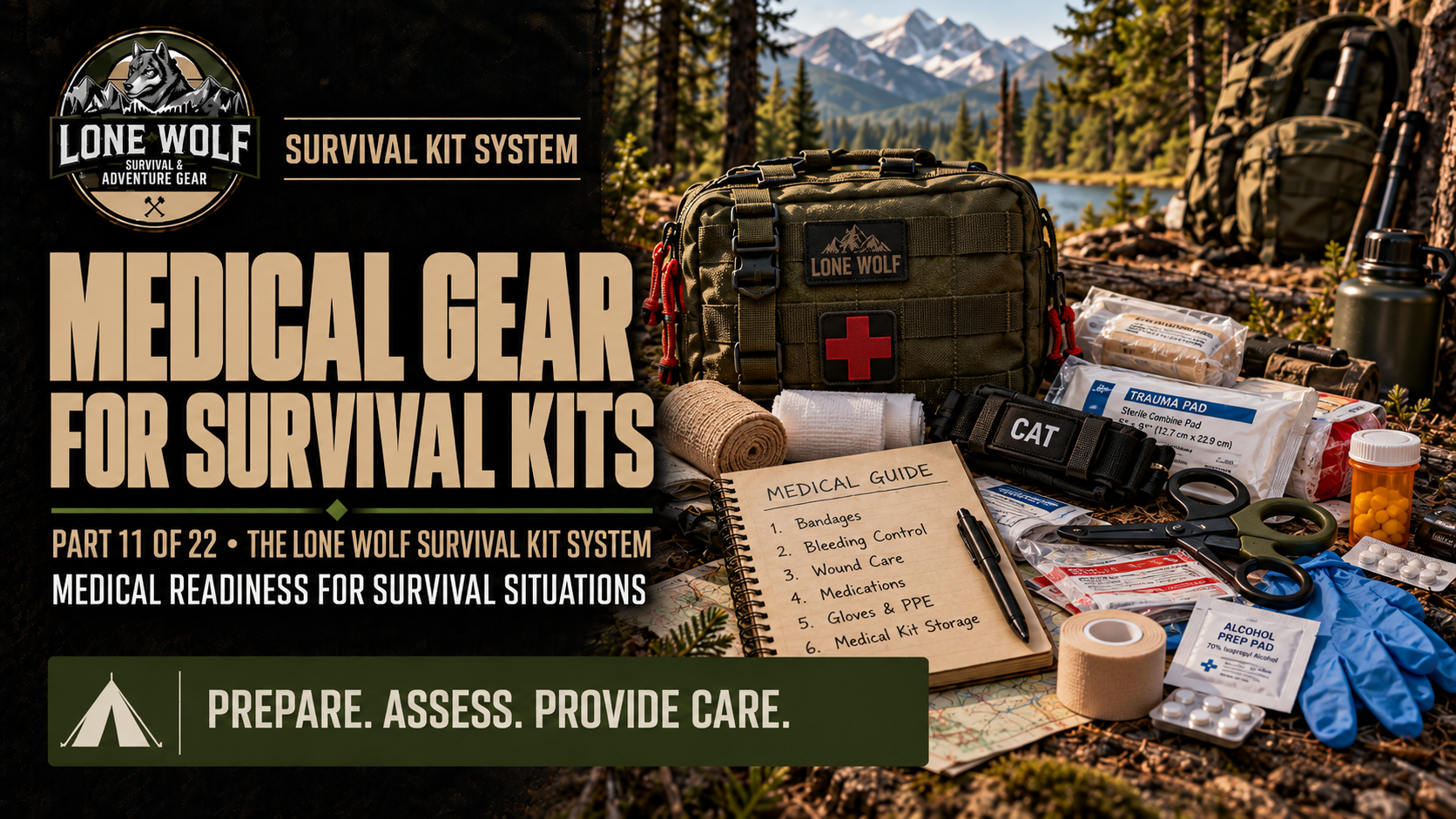
Medical gear and medical training are essential survival capabilities. Injuries and illness can become life threatening when professional medical care is delayed or unavailable. Severe bleeding can kill quickly. A badly injured leg can stop movement. Burns, dehydration, allergic reactions, illness, and the loss of necessary medications can create serious problems that require immediate action.
The medical gear in a survival kit should give you the supplies needed to respond to likely injuries and medical problems until professional care becomes available. That includes equipment for bleeding and wound care, common injuries, illness, medications, and the individual medical needs of the people who depend on the kit.
Training is just as important as the gear. Take an American Red Cross First Aid/CPR/AED course or comparable hands on first aid training when it is offered in your area. STOP THE BLEED training adds focused instruction for controlling life threatening bleeding.
Train every capable adult and older teenager in your family or group who is ready for the instruction. The person with the most medical knowledge could be the person who gets injured. Training several people gives the group more than one person who knows where the medical gear is and how to respond.
This article focuses on choosing, organizing, carrying, and maintaining medical gear. It includes basic guidance for routine problems while leaving serious trauma procedures and advanced treatment techniques to qualified hands on training.
You Are Here
Use the links below to move between the main Lone Wolf gateways, the Survival Kits Domain, the series hub, and this article.
Start Here
Medical capability combines the right medical gear, medications, medical information, organization, and training for the injuries and illnesses you may need to manage.
Capability
Capability means the ability to meet a survival need.
Build your medical loadout around the people who will use the kit, likely injuries and illnesses, kit role, expected duration, environment, available space, and level of training. A small EDC Kit needs a different medical loadout than a Bug Out Bag, INCH Kit, or Vehicle Kit.
Article Outline
- Bleeding and Wound Care
- Injury Treatment
- Illness and Medications
- Match Medical Gear to the Kit
- Key Takeaways
- Conclusion
What This Article Covers
This article covers medical gear for routine wounds and serious bleeding, supplies for common injuries, illness and medication planning, medical information cards, kit specific medical loadouts, and organization for quick access.
How to Use This Article
Read the sections in order when building a medical loadout from the beginning. Use the Jump To links when you need information about one specific part of an existing kit.
Jump To
Use the links below to move directly to any major section of this article.
Bleeding and Wound Care
Bleeding and wound care supplies should address both routine injuries and serious bleeding. Small cuts and scrapes are common, while a major wound can become life threatening very quickly. Carry supplies for both levels of need.
Routine Wound Care
Basic wound care supplies can include adhesive bandages, sterile gauze pads, rolled gauze, medical tape, wound cleaning supplies, antiseptic products, antibiotic ointment when appropriate, and disposable medical gloves.
For a minor cut or scrape, clean the wound, apply an appropriate wound care product, and protect the area with a clean dressing or bandage. Replace dressings when they become wet or dirty. Watch for increasing redness, swelling, drainage, pain, fever, or other signs that professional medical care is needed.
Serious Bleeding Gear
Serious bleeding requires equipment designed for rapid bleeding control. Depending on the kit and the user's training, trauma gear can include trauma dressings, pressure dressings, compressed gauze, trauma shears, and commercially manufactured tourniquets.
Keep serious bleeding gear where it can be reached quickly. Equipment buried beneath clothing, food, or other supplies loses valuable time when seconds matter.
Tourniquets, wound packing materials, pressure dressings, and similar trauma equipment require proper hands on training. STOP THE BLEED training teaches bleeding control techniques and gives students an opportunity to practice using this equipment before an emergency occurs.
Gloves and Barrier Protection
Disposable medical gloves provide a barrier between blood or other body fluids and the person providing care. Carry several pairs rather than a single pair. One medical incident can require multiple changes of gloves, and gloves can tear or become contaminated during treatment.
Injury Treatment
Medical gear should also address injuries that affect movement and the ability to perform survival tasks. A badly sprained ankle can stop travel. A broken leg can immobilize someone. An injured hand or arm can make it difficult to use tools, build shelter, prepare food, start a fire, or perform other essential work.
Sprains, Strains, and Fractures
Elastic wraps provide a compact option for many minor soft tissue injuries. Triangular bandages, medical tape, and splinting materials provide additional options for supporting and stabilizing injured limbs until professional care is available.
Splinting significant injuries requires training. Carrying a splint is valuable when someone in the group knows how to assess the injury and use it correctly.
Burns
Burns can result from fires, cooking equipment, heated water, fuel, hot surfaces, and other common survival activities. Useful burn supplies can include sterile nonstick dressings, burn dressings, sterile gauze, and gloves.
Serious burns require professional medical care. Formal first aid training teaches how to recognize the severity of a burn and respond appropriately.
Blisters and Foot Care
Blisters become especially important when a survival situation requires walking. Blister dressings, moleskin or similar products, adhesive bandages, and clean socks can address hot spots and damaged skin before foot problems make continued movement difficult.
Cold packs can also be included in larger medical kits where space allows. Vehicle Kits and larger group kits have more room for items that are difficult to justify in a compact EDC Kit.
Illness and Medications
Medical needs extend beyond wounds and injuries. Pain, allergies, stomach problems, diarrhea, dehydration, fever, and other illnesses can reduce a person's ability to function and can become serious when normal medical services are unavailable.
Common Medical Needs
Depending on the people using the kit, common supplies can include pain relievers, antihistamines, anti diarrheal medication, oral rehydration products, and a thermometer. Choose medications that are appropriate for the people using the kit and follow the product directions and existing medical guidance.
Personal Medications
Personal prescription medications require individual planning. Carry an appropriate quantity when possible and keep each medication clearly identified. Include prescribed rescue medications such as rescue inhalers or other emergency medications when they are part of the person's established medical plan.
Check expiration dates and protect medications from moisture, excessive heat, and freezing temperatures. Vehicle Kits deserve special attention because temperatures inside a vehicle can become extreme.
Medical Information Cards
Create a medical information card for each person who has ongoing medical conditions, prescription medications, serious allergies, or other information that could affect treatment.
Include:
- Medication names
- Dosage
- When each medication is normally taken
- Why each medication is taken
- Drug, food, or other significant allergies
- Relevant medical conditions
- Emergency contact information
- Date the information was last updated
Protect the card inside a sealed plastic bag or waterproof pouch. Store it with the medical gear or in another clearly identified location where members of the group or emergency responders can find it quickly.
Review the card whenever medications, dosages, allergies, medical conditions, or emergency contacts change.
Match Medical Gear to the Kit
The medical loadout should match the role of the survival kit, expected duration, environment, number of people, available space, likely medical problems, and the training of the people expected to use the gear.
EDC Kits
EDC Kits have limited space, so concentrate on compact immediate needs. A small medical loadout can include adhesive bandages, sterile gauze, medical tape, antiseptic wipes, gloves, blister treatment, and personal medications. A trained user can also carry compact trauma equipment when it fits the carry system.
Get Home Bags
A Get Home Bag provides room for additional gauze, larger dressings, medical tape, blister care, an elastic wrap, extra gloves, personal medications, and trauma supplies appropriate to the user's training. The medical loadout should reflect the possibility of traveling home on foot and treating injuries that interfere with movement.
Bug Out Bags
A Bug Out Bag can require medical supplies for several days away from normal resources. Add greater quantities of wound care supplies, additional dressings, injury treatment gear, medications, trauma supplies appropriate to training, and medical information cards for the people covered by the kit.
I'm Never Coming Home (INCH) Kits
INCH Kits require deeper medical capability for extended use. Increase quantities of wound care supplies and replacement dressings, expand medication planning, include more injury treatment gear, and carry medical reference information appropriate to the group's training.
Vehicle Kits
Vehicle Kits provide more storage space for larger medical kits, additional dressings, splints, blankets, extra gloves, trauma supplies, and larger quantities of frequently used items.
Vehicle storage also exposes supplies to high heat and cold. Inspect medications, adhesives, gloves, packaging, and other temperature sensitive items regularly and store them according to their requirements.
Organize Medical Gear for Access
Organization is part of medical capability. Critical supplies need to be easy to find and reach.
- Keep serious bleeding control gear immediately accessible.
- Group routine wound care supplies together.
- Group injury treatment supplies together.
- Keep medications clearly identified.
- Use labeled medical pouches or compartments.
- Keep medical information cards easy to locate.
- Make sure everyone in the group knows where the medical gear is carried.
Inspect the medical kit regularly. Replace used supplies, expired medications, damaged packaging, deteriorated adhesive products, contaminated items, and missing equipment.
Select > Organize > Train > Carry > Use
Select gear that matches the medical needs. Organize it for fast access. Train with the equipment. Carry it where it can be reached. Use it within the level of care you have been trained to provide.
Key Takeaways
- Carry supplies for routine wound care and serious bleeding.
- Include gear for common injuries such as sprains, fractures, burns, and blisters.
- Carry medications that match likely needs and each person's existing medical requirements.
- Include prescribed rescue medications when they are part of a person's established medical plan.
- Keep medical information cards current and protected from water.
- Match medical gear to the role and expected duration of the kit.
- Organize critical medical supplies for quick access.
- Train with the medical equipment you carry.
- Train multiple capable adults and older teenagers in the group.
- Inspect medical supplies and medications regularly.
Select > Organize > Train > Carry > Use
Build emergency medical capability by combining the right gear with organization and proper training.
Conclusion
Medical gear and medical training can save lives when normal medical care is delayed or unavailable. Build the medical loadout around bleeding and wound care, common injuries, illness, medications, personal medical needs, and the role of the survival kit.
Keep critical equipment organized and accessible. Maintain medications and supplies. Keep medical information current. Most importantly, learn how to use the equipment before an emergency occurs.
American Red Cross First Aid/CPR/AED training, STOP THE BLEED training, and other qualified hands on courses provide the skills that equipment alone cannot provide. Train every capable adult and older teenager in the group who is ready for the instruction so medical capability does not depend on one person.
Select the gear. Organize it. Train with it. Carry it where it can be reached. Build emergency medical capability before it is needed.
Part 12 continues The Lone Wolf Survival Kit System with Food for Survival Kits.
Continue Learning
Continue building survival knowledge and skills with these Lone Wolf articles and systems.
